
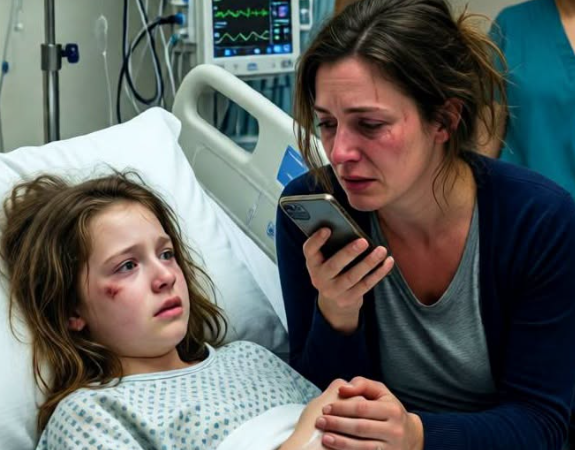
Katie was in ICU after a hit-and-run. My mother-in-law called the hospital and said, “Come cook my birthday dinner, or lose your home.” I stayed beside my daughter. Then Katie whispered, “Andrew pushed me,” and when police opened the forged power of attorney authorizing the sale of my house, Barbara froze.
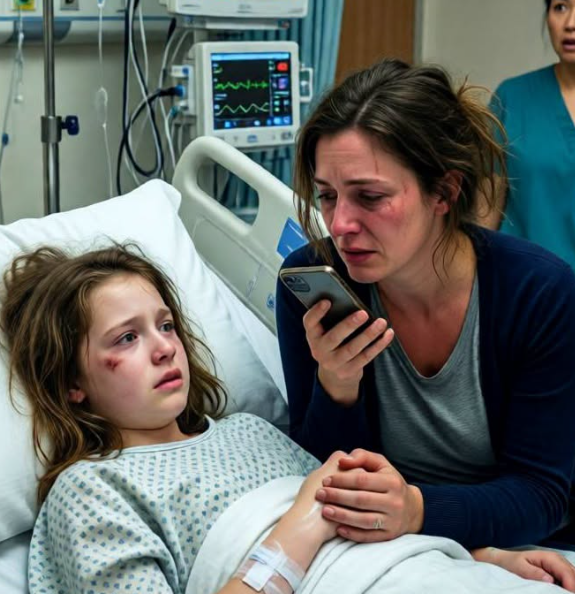
The call came while I was standing under hospital lights, staring at my ten-year-old daughter through a blur I could not blink away. Katie had always been all elbows, ribbons, and stubborn little goals, the kind of child who practiced cartwheels in the hallway even when I begged her to stop before she knocked over a lamp. That Tuesday, she had been walking to gymnastics on the same route she took every week, and by sundown a nurse was asking me to sign forms with hands that would not hold still.
They told me she was stable, then they told me she was in intensive care, and somehow both things were supposed to live in the same sentence. I sat beside her bed and watched the monitor count what my heart could not. Andrew, my husband, had not arrived yet, but my phone lit up with his name, so I answered before the first ring finished.
It was not Andrew. It was his mother, Barbara, and she sounded irritated before I even said hello. “Where are you?” she asked, as if I had missed a hair appointment instead of standing beside my child in ICU.
“The hospital,” I said. “Katie was hit by a car.”
Barbara paused just long enough to pretend she had taken that in. Then she said Andrew told her Katie was stable, and her birthday dinner was tomorrow, and people were already expecting the chicken I always made. She had promised everyone I would cook because, according to her, I was the only one who knew how to make things look proper.
I looked at Katie’s small hand under the blanket. There was tape over the IV on her wrist and a bruise near her temple that made her look younger than ten. “Barbara, my daughter is in intensive care,” I said, and my voice came out so flat I almost did not recognize it.
“You are so dramatic,” she said.
Those five words did not break me loudly. They settled somewhere deep and cold. Then Barbara lowered her voice and told me if I did not come home that night to help with her party, I should not expect to get back into the house.
Barbara did not own our house. She had no right to threaten me with a door she had never paid for. But Andrew had let her treat our marriage like an extra room in her own home for so long that she believed my place in it could be voted on over casserole dishes.
In the background, I heard Andrew say, “Mom, stop,” but he sounded tired, not angry. Then he came on the line and told me Katie was stable and maybe I could just calm his mother down. He said it the way he always did, soft enough to sound reasonable and selfish enough to make me question myself.
I looked at my daughter and said, “No.”
That was all. I did not explain. I did not bargain. I did not ask permission to be a mother.
Andrew went quiet, and Barbara made a sound like I had embarrassed her in public. Then the call ended, and the room returned to the small hospital noises I had already started to hate. I held Katie’s hand through the night while nurses came in and out, and every time my phone buzzed, I turned it face down.
Morning did not arrive like mercy. It came gray and thin through the blinds, with coffee that tasted burnt and a chair that had carved a line of pain across my back. I was leaning over Katie’s blanket, counting her breaths again, when her fingers moved inside mine.
Her eyes opened slowly. Not all at once, not like people wake up in movies, but enough that I forgot the floor under me. I bent close and whispered her name, and a nurse touched my shoulder like she was reminding me to breathe.
Katie looked at the ceiling first, then at me. Her lips moved, and I lowered my ear until I could feel the warmth of her breath.
“Mom,” she whispered. “Andrew did it.”
For one terrible second, my mind tried to protect me from the words. I told myself she was confused, that pain medicine and fear had made the world tangle. Then Katie squeezed my hand so hard her little fingers shook, and she whispered it again.
“He pushed me.”
I did not scream. I did not drop to the floor. I pressed the call button and told the nurse we needed someone from the police, because my daughter had just named the man who had been standing in our family photos for eight years.
Detective Reynolds arrived before noon. He listened to Katie once, then again, and his face never changed, which somehow frightened me more than if it had. When she was done, he closed his notebook and looked at me with the kind of care people use when they are about to hand you a truth that has teeth.
“Amanda,” he said, “do not call your husband.”
(I know you’re curious about the next part, so please be patient and read on in the comments below. Thank you for your understanding of the inconvenience. please leave a ‘YES’ comment below and give us a “Like ” to get full story )