
Part 2: Building the Defense
Part 2: Building the Defense
Dana inspected every room.
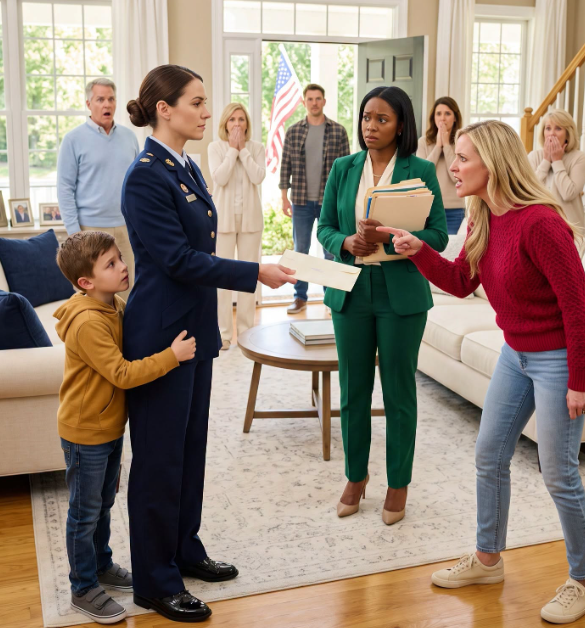
She checked the refrigerator, pantry, smoke detectors, medicine cabinet, water temperature, locks, and fenced backyard where Eli’s blue slide leaned beneath the maple tree. She photographed the stocked shelves, clean bedrooms, and emergency contact sheet on the fridge.
I cooperated.
The hardest part was when she asked to speak with Eli privately.
They sat at the dining table while I waited in the living room, close enough to see them but not hear every word.
Dana showed Eli a page of illustrated faces and asked which one looked like how he felt at home.
He pointed to a smiling one.
She asked if anyone frightened him.
He shook his head.
She asked if I hit him.
“My mommy doesn’t hit,” he said. “She uses the serious voice.”
Dana’s mouth twitched.
When she asked what happened when he got in trouble, he said, “I sit on the quiet chair. And I lose cartoons.”
When she asked what I did at night, he said, “She reads two books unless it’s late. Then one long book counts as two.”
I pretended to cough into my hand.
When she asked about the bruise on his shin, Eli explained the bicycle crash with dramatic detail, including the color of the neighbor’s recycling bin and the squirrel that had watched him fall.
By the time Dana left, the sunlight had turned gold.
“I found no immediate safety concern,” she said. “But the case remains open while I review the photographs and interview collateral contacts.”
Then she added, “The reporting party also indicated a willingness to seek custody.”
There it was.
Not concern.
Intent.
After she left, I leaned against the door and felt my knees weaken.
Eli wrapped both arms around my waist.
“Is the park closed?”
I laughed shakily.
“No, buddy. We just missed it today.”
“We can make pancakes.”
“It’s dinner time.”
“Dinner pancakes.”
That night, after Eli fell asleep, I called my former commanding officer, retired Captain Lucas Hale.
I told him everything.
He listened without interrupting.
When I finished, he said, “Do you believe your sister filed the report?”
“Yes.”
“Belief isn’t evidence. Build the evidence.”
He told me to create a chronology, preserve messages, gather medical records, school attendance, childcare receipts, work schedules, security footage, and witnesses.
“Do not confront Monica,” he said. “Do not give her advance notice.”
“She’s my sister.”
“Tonight, she’s the complaining witness.”
That sentence hurt.
I opened a document and typed:
Eli Bennett — Child Welfare and Custody Defense Chronology.
For four hours, I gathered everything.
Pediatric records showed regular checkups and healthy development. His teacher described him as cheerful and prepared. The after-school program showed digital pickup times, usually between 5:18 and 5:34. My command calendar showed no overnight duty in fourteen months.
I downloaded photos from my phone showing the bike fall, scraped elbow, and dining-room bump. Each had dates and context.
Then, at 1:12 a.m., I found something else.
Our family photo-sharing account had been accessed from an unfamiliar device nine times in six weeks.
The account contained private pictures of Eli.
Including the injuries Dana mentioned.
The login location was three blocks from Monica’s apartment.
The first unauthorized login happened the same night Monica had asked me to lend her money.
—————————————————————
Please type “End” if you’re ready for the next part and I’ll send it right away.